
Day 2 - There Are No Bad Trips, Only Bad Attitudes
“That’s The Way She Goes”
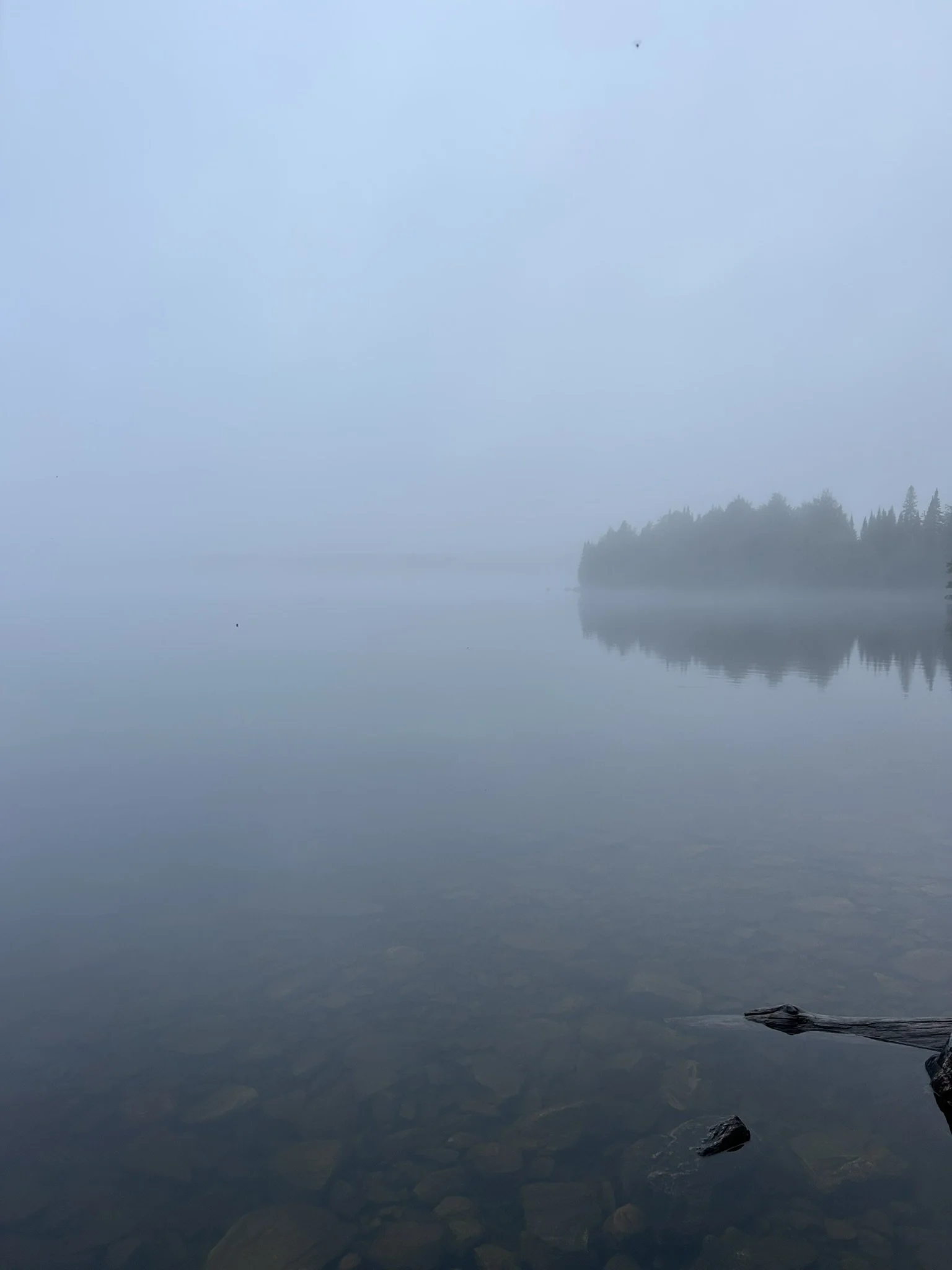
Day 2 started beautifully. I originally woke up around 5 AM to light rain and birds chirping outside the tent. It was one of those peaceful camping mornings where you just lay there listening to everything around you waking up. I ended up falling back asleep until around 6:30am, and when I got out of the tent, Burnt Island Lake was completely covered in fog and mist. It honestly looked surreal. I had to go to the thunderbox pretty badly, but I remember stepping out of the tent, looking at the lake, and just stopping for a couple minutes because it was such a cool sight. Just a complete wall of fog sitting over the water. I’d always wanted to experience one of those misty Algonquin mornings you see in photos, but somehow I never had before. Even now, thinking back on it, it’s funny how quickly it disappeared. By around 8:30am the lake was crystal clear and sunny again. I think most trips I just sleep later, so I miss that early morning transition.
The morning itself went really smoothly. Had coffee. Made oatmeal. Packed up camp slowly. Had a successful thunderbox movement too, which honestly deserves mentioning because sometimes when I go camping, my body refuses to cooperate until Day 3. So overall, morale was high. Mentally, my mind was still completely focused on the canoe. Can the thwart hold? Can I actually make it to Big Trout today? Can this thing survive the portages? That was the big question hanging over the entire morning. I finished my oatmeal sitting in my chair overlooking Burnt Island Lake, staring out at the water while trying not to overthink things. Eventually there was nothing left to do except repair, test the repair, and get moving.
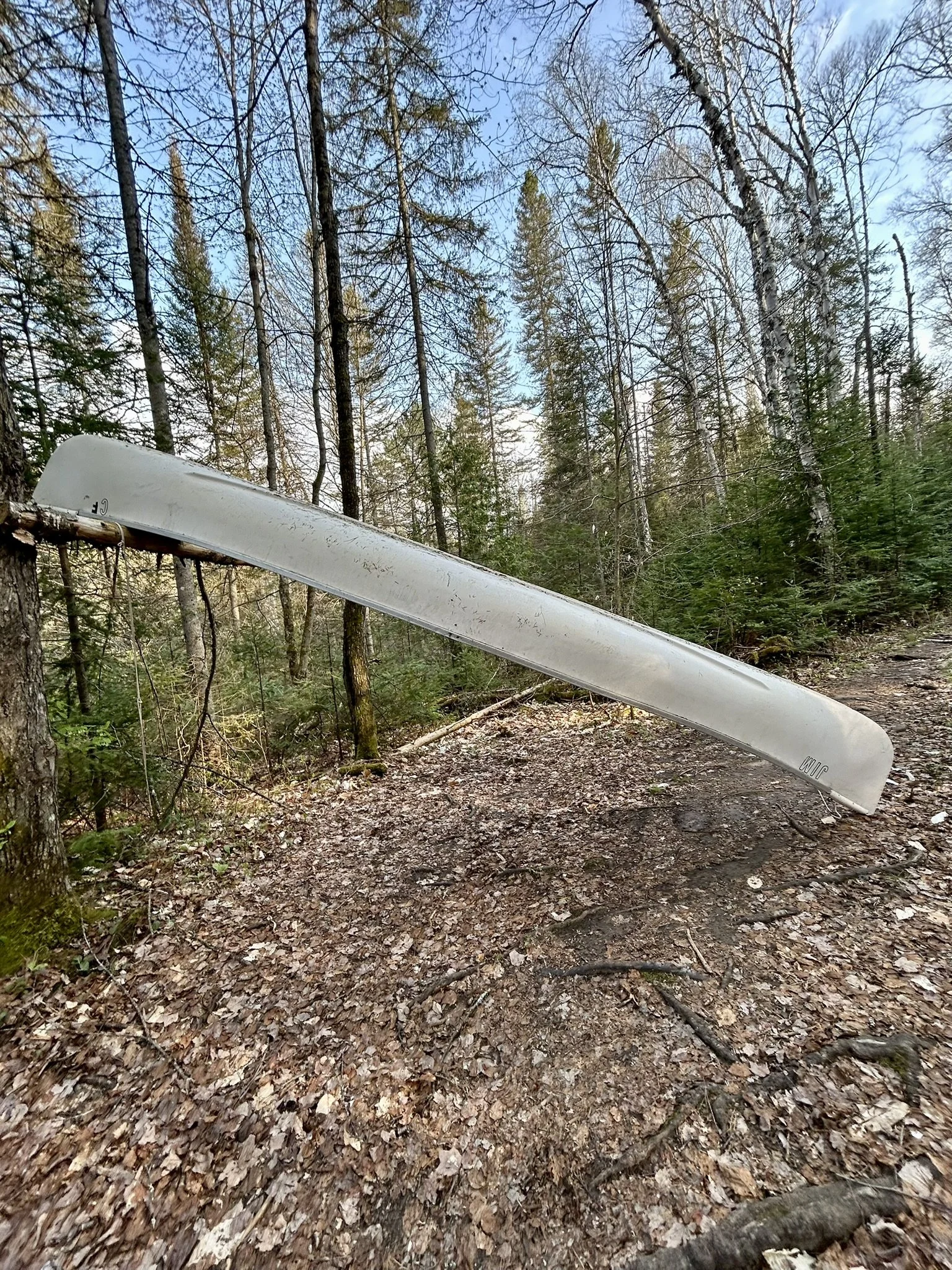
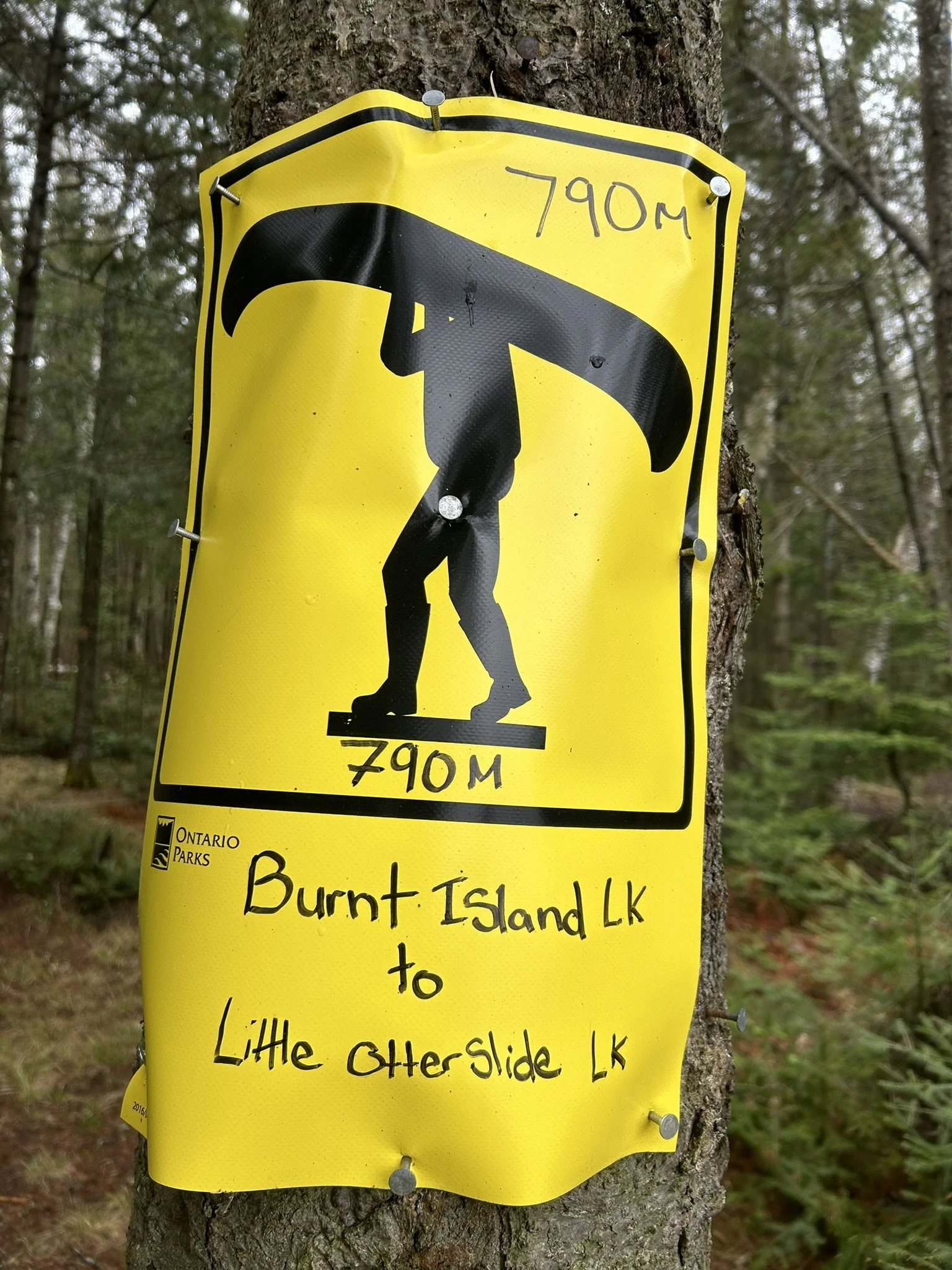
A combination of zipties, ducttape (not ducktape quack quack), rope, seam seal, and prayers were used to repair the thwart. I also had to channel my inner Macgyver. Somehow, the repair held. So onward I went. Today was a slog though. A real slog. My pack was heavy. Honestly, I think I overpacked food. The canoe itself was already heavy to begin with, but with the broken thwart situation and no proper yoke, the portaging became absolutely brutal. The first portage of the day was the 700 m from Burnt Island Lake into Little Otterslide Lake, and that thing humbled me quickly. Taking the pack across first and returning took around 25 minutes total. Then coming back for the canoe alone took about 45 minutes. Before I even started, I knew I had six portages ahead of me that day, including two around the 700 m mark. With the broken thwart, no proper yoke, and a heavy food pack, it would have been easy to look at the entire day and feel overwhelmed.
Instead, I found myself using a strategy I often teach called chunking. The basic idea is simple: don't focus on the entire task. Focus on the piece directly in front of you. If I spent the day thinking about six portages, I was going to make myself miserable. So instead, I focused on one portage at a time. Then, on the longer carries, I broke things down even further.
At that point I had developed a system. I’d study the trail ahead and pick out trees every 50 to 200 metres or so. I’d get the canoe up, grind until I reached the next tree, then angle the front of the canoe onto the tree while the back rested on the ground so I could partially unload the weight from my shoulders and spine for a minute. Honestly, my legs were mostly okay. It was my shoulders and spine that were getting cooked. Like from C1 to L5, my whole back just felt compressed and irritated. The awkward balancing from not having a yoke made every carry feel active instead of stable. But, as Ray from Trailer Park Boys would say, “That’s the way she goes. Sometimes she goes and sometimes she doesn’t” I wasn’t racing anybody. I wasn’t in a rush. As one of my favourite authors, Kevin Callan, so brilliantly says; “I am a tortoise, not a hare”. So I just kept grinding it out section by section until eventually I reached the end.
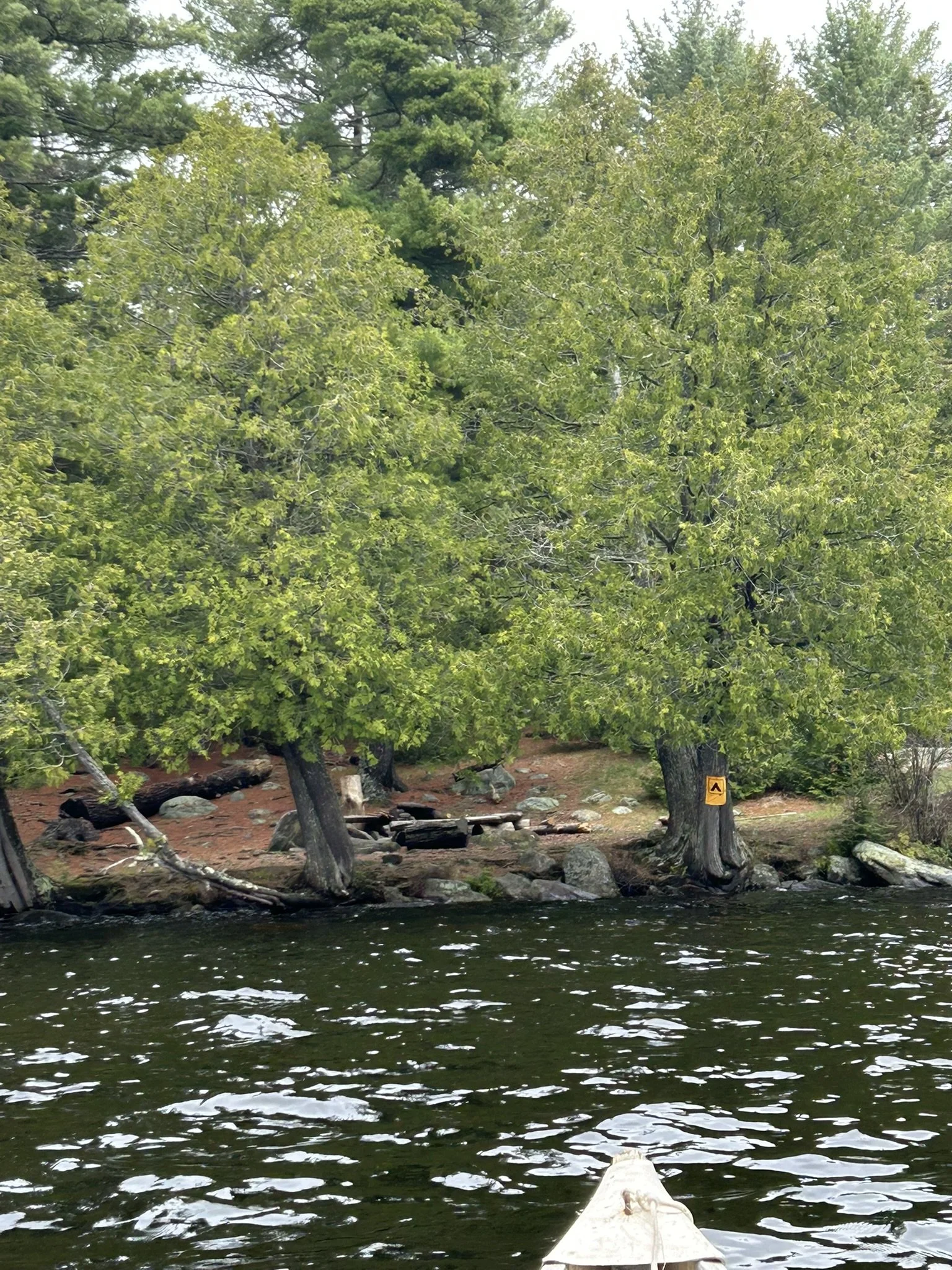
And the thing is, after surviving the 700 m, mentally everything else started feeling smaller. I still had five more portages coming through Otterslide Creek, and sure one of them was also 700m (FML) but luckily most were shorter. A couple in the 200s, one around 380, and the final one was only 100 m. By the time I hit that last little 100 m, it barely even registered as a portage anymore. Once I got onto Little Otterslide and then Otterslide Lake itself, things started feeling rewarding again. Those lakes are gorgeous. I stopped at the exact campsite I had originally planned on staying at the previous night before the thwart broke. It was around noon by then and my body was completely cooked, so I figured it was the perfect spot for lunch and a reset.
And honestly, I loved that site. Beautiful sloping rock at the front. Gorgeous view out over the lake. It felt like one of those campsites that would have an unbelievable sunset. I ended up staying there for quite a while. Maybe an hour and a half, maybe two. Time started feeling pretty loose out there. This was also where I made the pizzas for the first time, and let me tell you, they were unreal. I couldn’t really cut them properly into slices like I would at home, so instead I folded them over into these little pizza pocket calzone-type creations, and honestly? Absolute game changer. Nigel’s innovation of the day, brought to you by Coaching With Nigel.
I made the first pizza while prepping the second one beside it. Ate the first one and immediately realized I probably packed more food than I actually needed for this trip. That became a bit of a pattern over the first couple days. I’d expect to be starving, then get full pretty quickly once I actually started eating. So instead of forcing myself to finish everything and potentially getting sick, I packed the leftovers out and moved on. Made myself a café mocha afterward too, and honestly, as good as instant coffee can possibly be, it was solid. Not exactly a caffeine rocket ship, but coffee + cocoa = enough to wake me back up for the second half of the day.
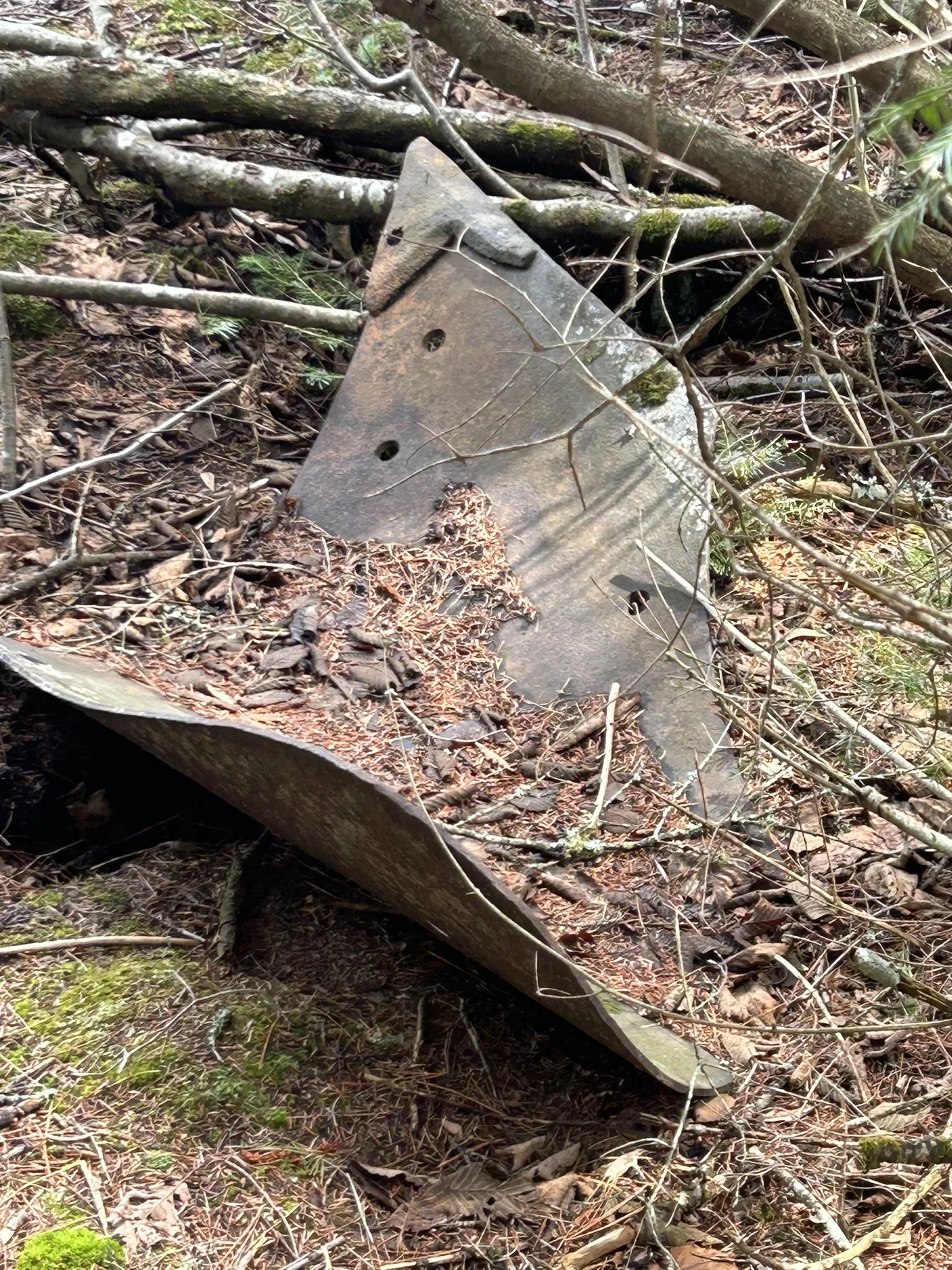
From there I pushed onward into the creek system and remaining portages. The first few went relatively smoothly. One around 290 m, then a 380, then another around 250. At the first portage my map marked old logging camp ruins nearby, so I spent some time wandering around trying to find them. I managed to find old horse sleigh runners, which was really cool, but I couldn’t locate the stove or building remains the map mentioned. Still worth the detour though. The creek sections between portages were beautiful. Honestly some of the prettiest travel of the trip so far.
Birds everywhere. I saw a hawk soaring overhead. Loons. Mergansers, I think. Blue Jays too, which honestly shocked me because I forgot how massive Blue Jays actually are in the wild. At first I just saw this giant flash of blue moving through the woods and thought, “What the hell is that?” Then it clicked. Also saw three beavers swimming through the creek. Those were my first real close-up swimming beaver sightings of the trip, and it was hilarious because I think one got slightly territorial after I startled it. I gave them space though.
The final major portage before Big Trout was another long one, around 700 or 750 m depending what you call it, and by that point I honestly don’t even know how I got through it. I just logged it out. That’s really the only way to describe it. Pack across first. Clif Bar. Back for the canoe. Tree by tree. Rest stop by rest stop. The same chunking strategy that got me through the first 700 m carry got me through this one too. Three blowdowns along the trail made things even more annoying, but eventually I made it. Then finally came the short 100 m into Big Trout Lake.
My map mentioned a natural spring near the portage hidden behind a rock face along a low trail. I found the rock face. Found the trail. Never found the spring. At that point the wind had started picking up pretty heavily though, so eventually I gave up and moved on. Then suddenly there it was. Big Trout Lake. And wow. It’s funny because every lake feels huge until you reach the next one. Canoe Lake feels massive. Then Burnt Island feels massive. Then you arrive at Big Trout and realize the scale just keeps growing. That lake makes you feel small.
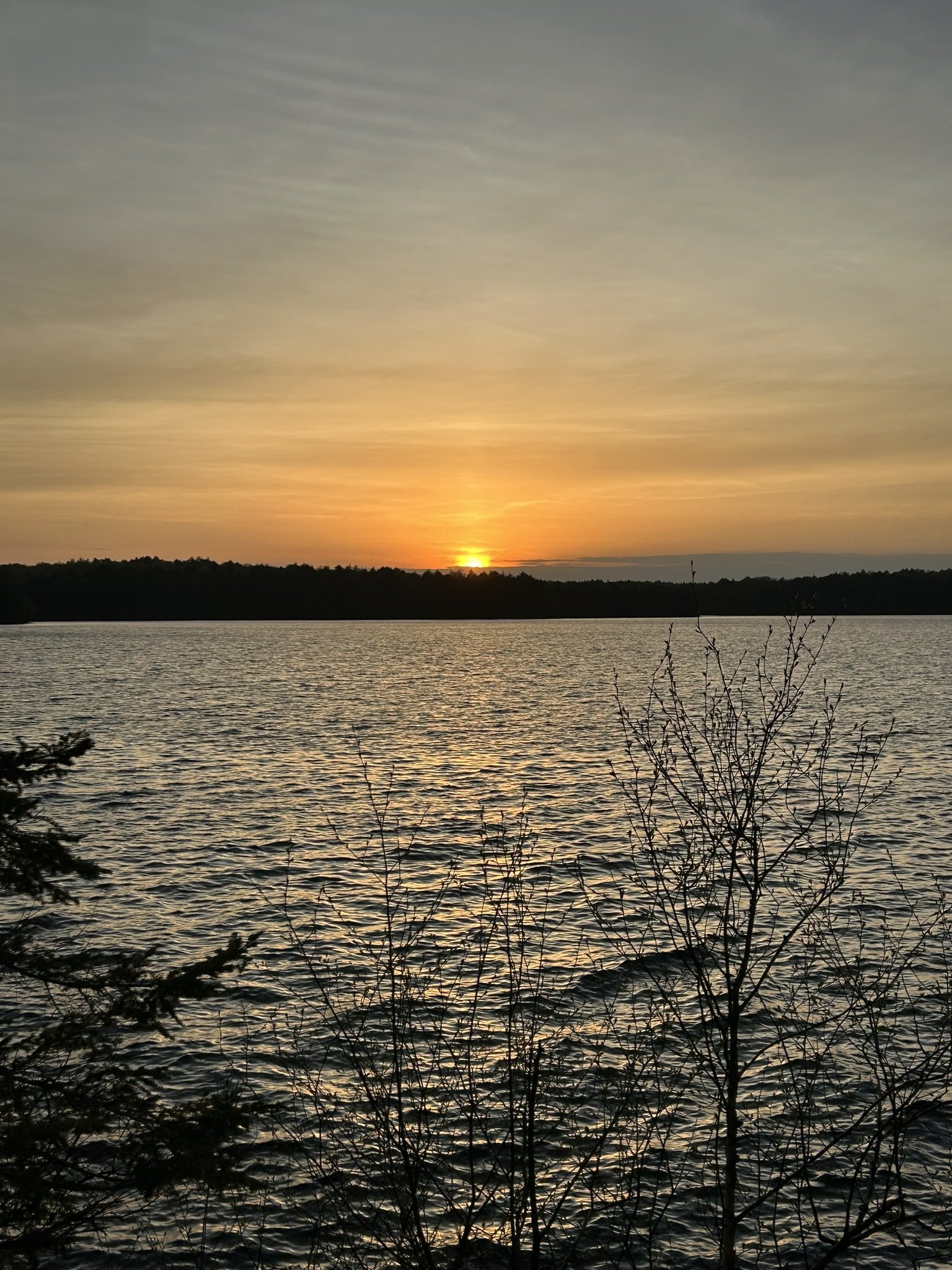
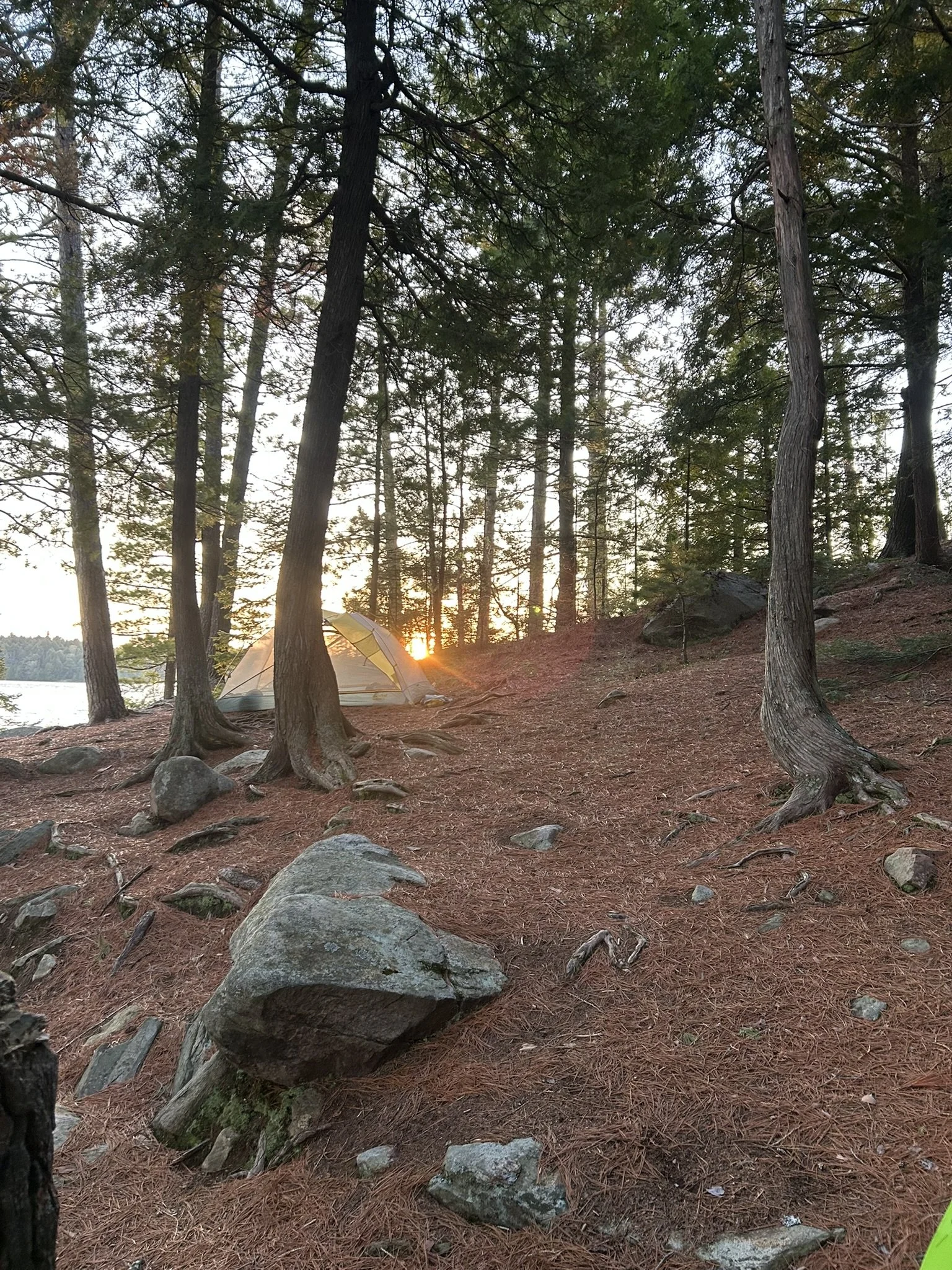
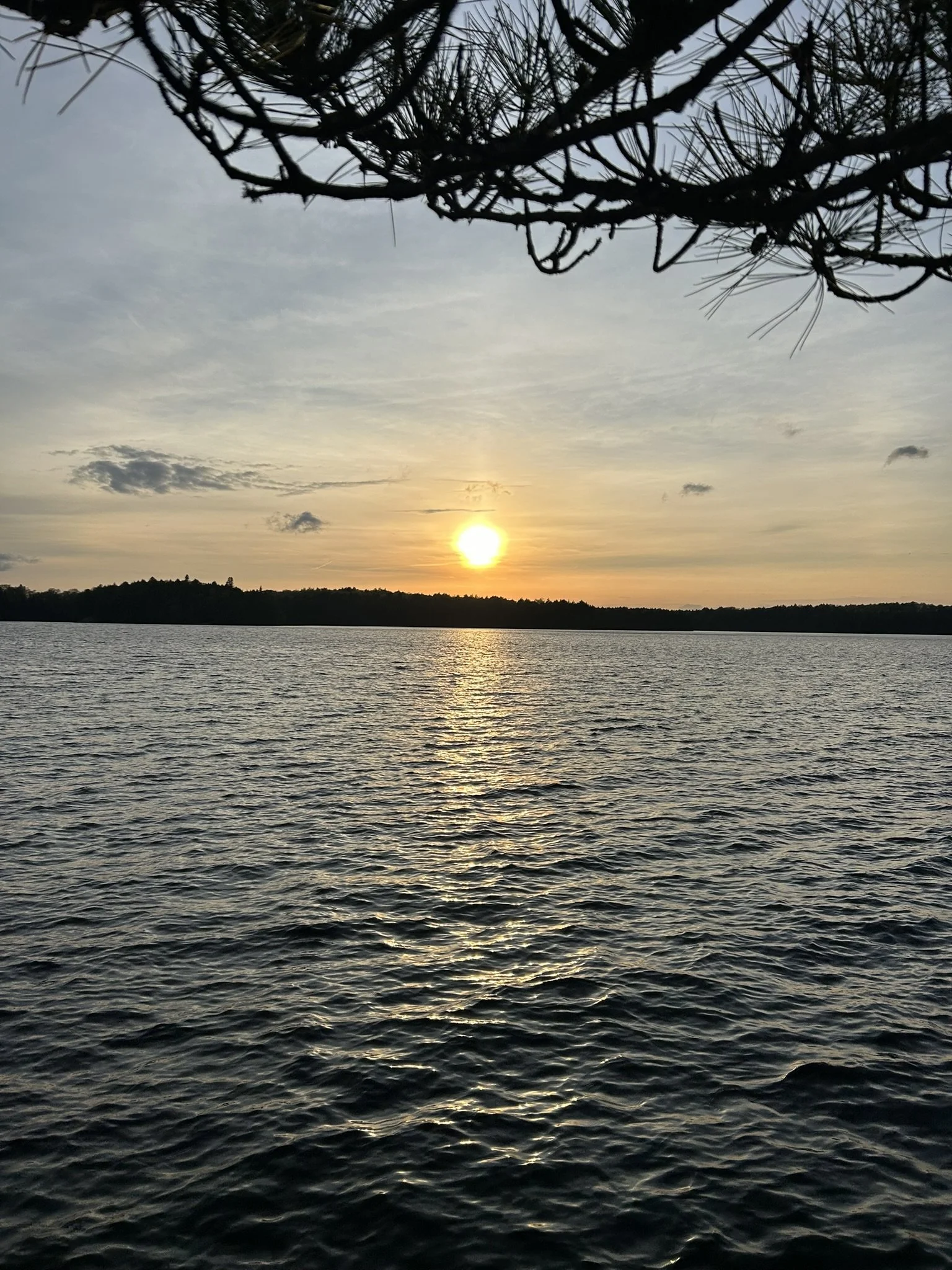
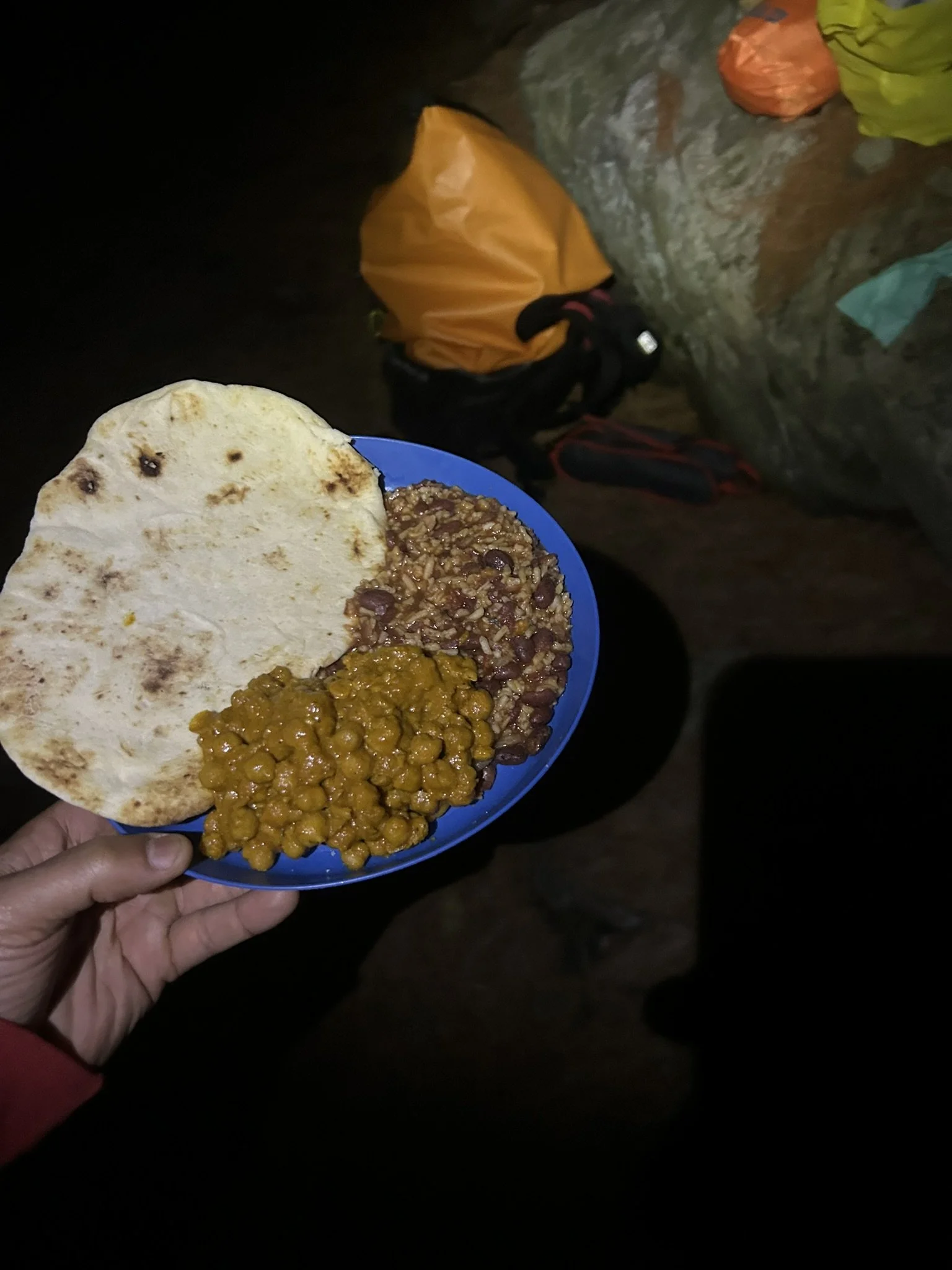
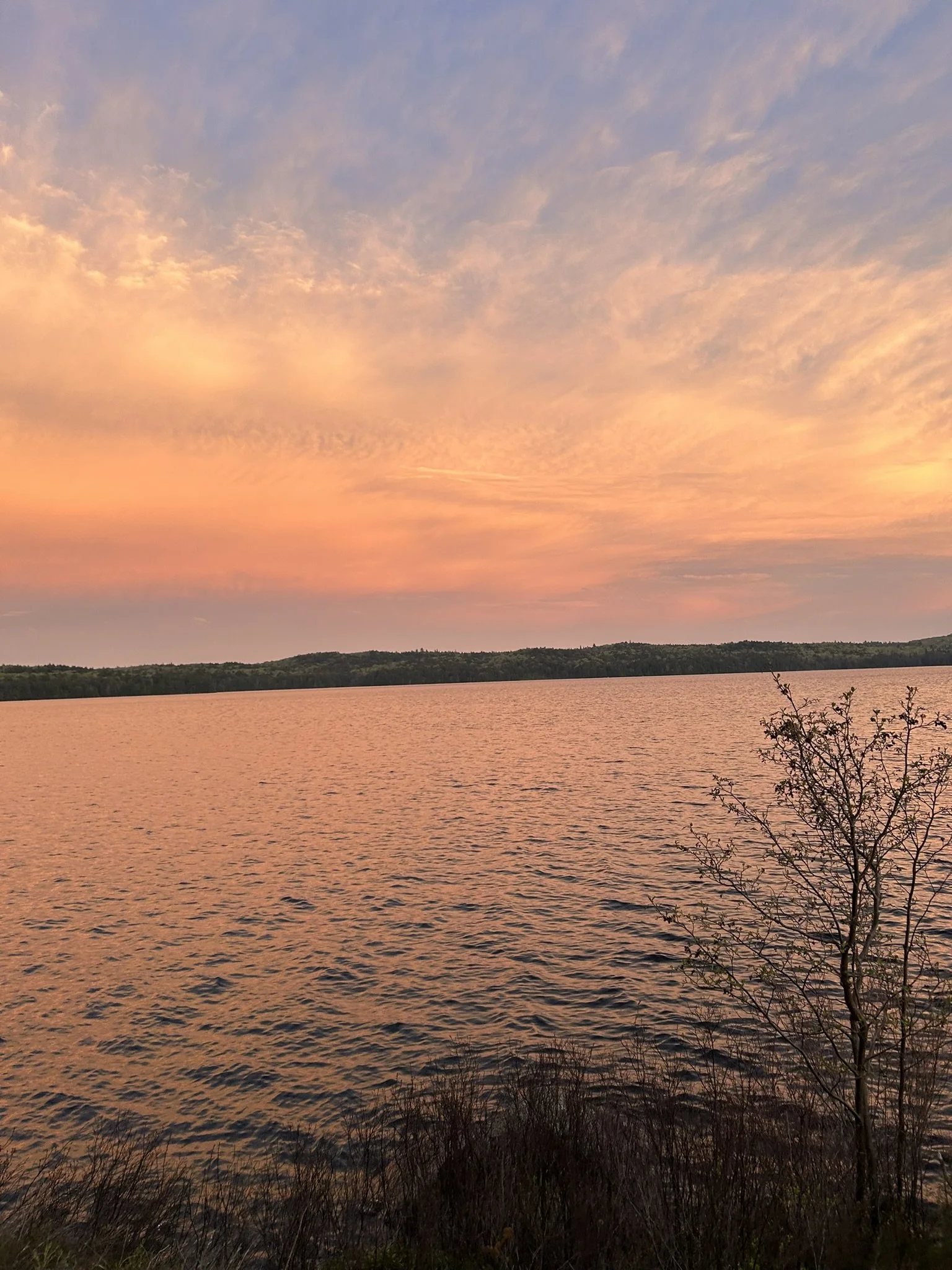
It’s hard to even describe what makes it so beautiful specifically. It’s just the scale of everything. The shoreline. The shape of the lake. The openness. The feeling of being deep in the park. And somehow, after the day I’d had, I made it there in time for sunset. I got the tent up, started a fire, got dinner going, and then just sat there watching the sun go down over Big Trout Lake. Absolutely incredible. Dinner that night was curry with Backpacker’s Pantry rice and beans, naan bread, and hummus. Honestly, rehydrating everything went way smoother than I expected.
I made too much food again though. I ate all the curry, but only about half the rice and naan before I hit that same feeling of, “Okay, don’t force it.” Still, I felt great afterward. Full. Warm. Satisfied. Sitting there at the water’s edge later that night, looking out across Big Trout with the moon reflecting off the lake, I realized how much my mindset had shifted in just 24 hours.
Because truthfully, Day 1 was rough. I wasn’t having a good time mentally after the thwart broke. The storm rattled me. The uncertainty rattled me. It just didn’t feel good. But Day 2 felt completely different. Not just weather-wise. Emotionally too. I felt hopeful again. Optimistic. Like the trip had finally found its rhythm.
And honestly, I think part of that was because Burnt Root Lake finally felt real now. Ever since Nicole and I first started researching Algonquin trips years ago, Burnt Root was always one of those dream destinations in my mind. At the beginning it felt impossible. Too far. Too ambitious. And now suddenly I was one day away from actually getting there. The lake has so much history too. Old logging remnants. The alligator machine on the south shore. The anchor on the island. The root cellar at the north end. I’d spent years reading about it. And tomorrow I was finally going there.
That part honestly felt surreal. Crossing Big Trout tomorrow would definitely be a challenge, but compared to today’s six-portage grind, Day 3 looked beautiful on paper: 300 m. 40 m. 80 m. That’s paradise compared to what I’d just done. And the best part was knowing that once I got there, I’d have multiple nights on Burntroot to rest and just exist out there. No rushing. No packing up immediately the next morning. No pressure. Just time.
So by the end of the night, sitting there looking at the water, I realized this wasn’t just a trip anymore. This was an adventure. This is what we do it for. And honestly, I couldn’t wait to see what Day 3 had in store. Catch y’all on the flip-flop.
Trip at a Glance
Trip Length: 8 Days / 7 Nights
Solo Trip #: 3
Backcountry Trip #: 8
Planned Route:
Canoe Lake → Otterslide Lake → Big Trout Lake → Burntroot Lake (3 nights) → Big Trout Lake → Burnt Island Lake → Canoe Lake/Home
Actual Route:
Canoe Lake → Burnt Island Lake → Big Trout Lake → Burntroot Lake (3 nights) → Big Trout Lake → Little Otterslide Lake → Canoe Lake/Home
Paddling Distance: 88.8 km
Portaging Distance: 27.6 km
Total Distance Travelled: 116.4 km
Total Portages: 26
New Lakes Travelled: 6
New Creek Travelled: 1
Favourite Campsite: Anchor Island, Burntroot Lake