
Day 6 - There Are No Bad Trips, Only Bad Attitudes
The Hardest Day of My Life... So Far
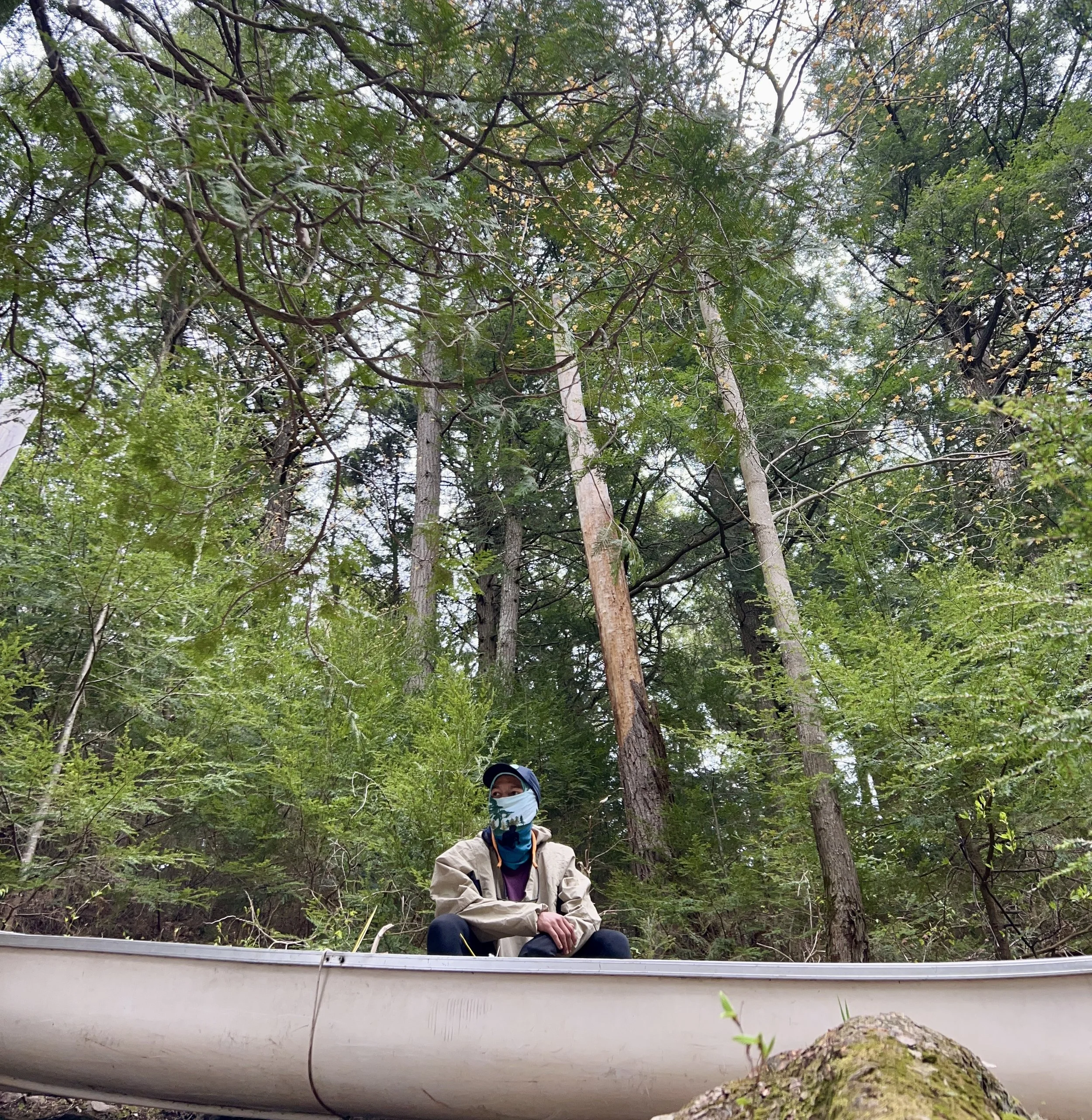
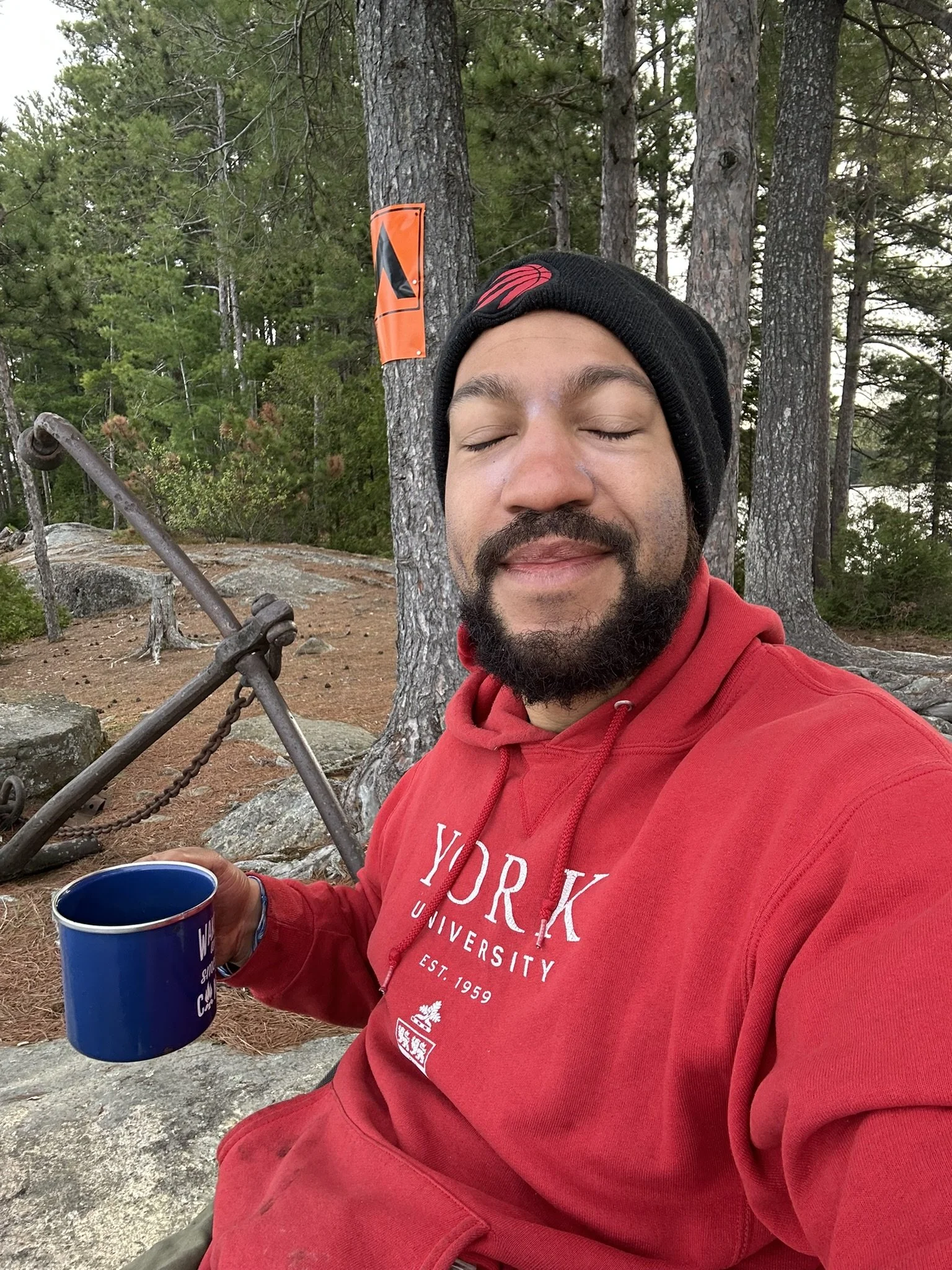
I feel like every day of this trip I've been saying, "This has been the hardest day so far." Looking back, that statement had become a bit of a running joke because every new challenge seemed to raise the bar. Every difficult paddle, long portage, and weather system felt like it deserved the title at the time. Day 6 finally settled the debate. This was, without question, the hardest day of the trip and one of the hardest physical challenges I've ever experienced. Looking back now, it's also one of the days I'm most proud of.
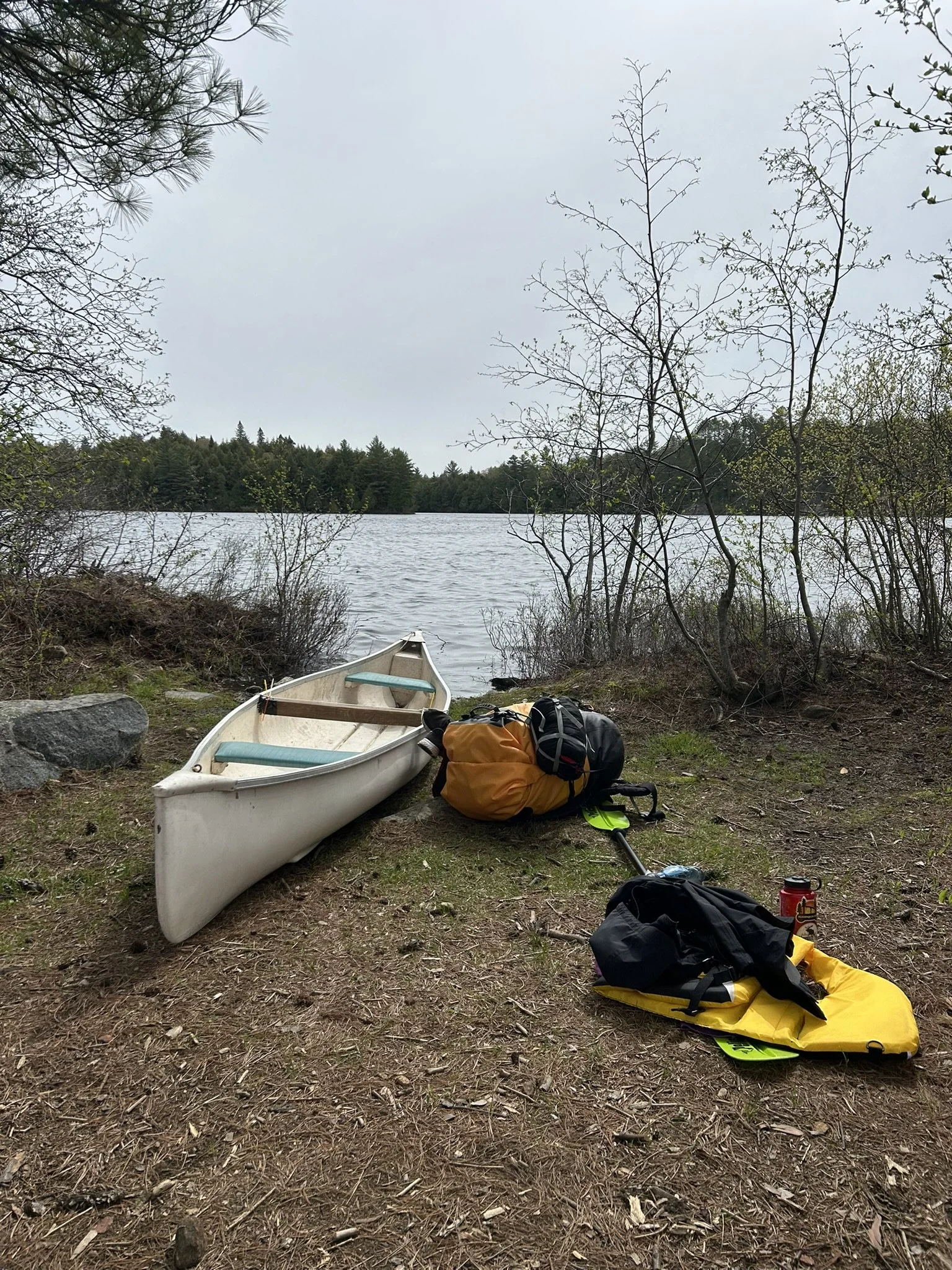
The morning started well enough. I woke up reasonably early, not sunrise early, but early enough that I felt good about the day ahead. Oatmeal. A BLT, minus the tomato because I still refuse to acknowledge tomatoes as a worthwhile sandwich ingredient. Two coffees. Camp packed up. Everything felt smooth. I launched from Anchor Island around 11:15 a.m., roughly an hour and a half earlier than I had reached Big Trout on the way in. That felt like a win.
More importantly, I felt optimistic. On the way into Burntroot, Longer Lake had punished me with brutal headwinds. Looking at the map, I assumed I'd have the opposite on the return. Tailwinds and easier travel. A relatively straightforward day back toward Big Trout. The wilderness listened to my plan, laughed, and prepared a different experience.
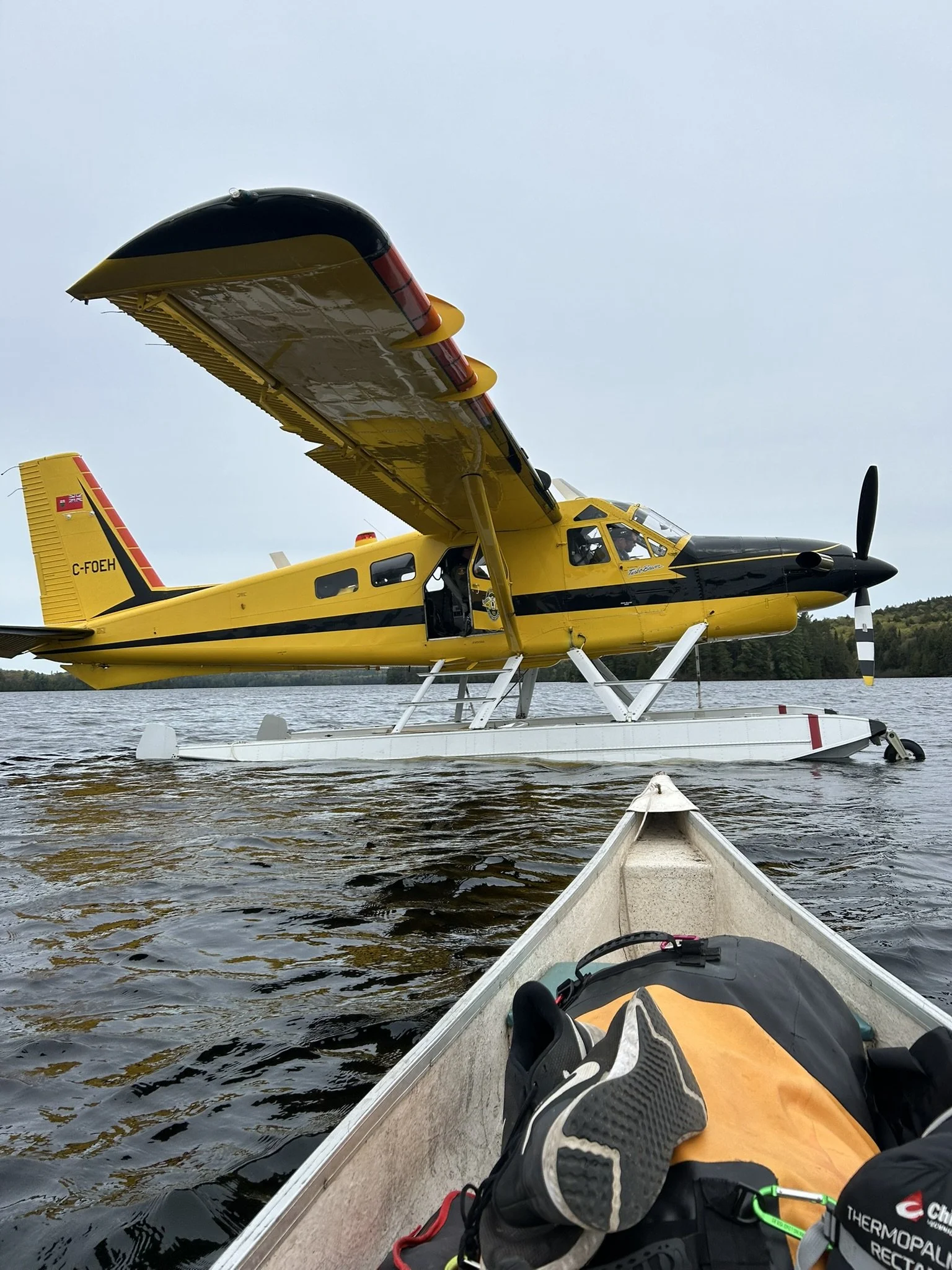
As I paddled south from Anchor Island toward Red Pine Bay, I heard the park plane again. During my stay on Burntroot, I'd heard it several times somewhere beyond the horizon but never actually seen it. This time it sounded much closer. Then suddenly it appeared over the treeline and began circling overhead. My first thought was maybe there was an emergency at home. My second thought was maybe something significant was happening in the park. My third thought was, honestly, "I don't know, I'm a Black guy. Do they think I'm stealing nature or something?" I gave them a friendly wave and even a thumbs up. I thought they were doing a check to make sure I was safe and then they would continue flying off. However when the plane made it to the end of Burntroot, it turned around, and came in for a landing.
A conservation officer opened the door and motioned for me to paddle over. A few minutes later I found myself floating beside a parked floatplane in the middle of Burntroot Lake. The conservation officer literally held my canoe against the plane with his foot while we chatted. As it turned out they were conducting fishing enforcement checks. Not just licences, but making sure anglers were targeting the correct species while following regulations and staying within legal possession limits. At first I thought landing a plane to check fishermen seemed excessive. Then I thought about it more, and honestly, I loved it.
That's exactly why Algonquin exists. The park was created to protect the watersheds, fish, wildlife, forests, and ecosystems. They only remain because people are actively protecting them. This conservation officer wasn't bothering people. He was helping preserve the very thing that brought all of us here in the first place. We chatted for ten or fifteen minutes after they realized I wasn't fishing. At one point I asked whether my wave had caused them to land. "Nope," they laughed. "We were landing anyway." The pilot did give me one useful piece of advice. Apparently, waving can be interpreted as a distress signal. Good to know.
Naturally, before they left, I asked if they happened to have a square-head screwdriver for the canoe repair. No luck. Worth a shot. A few minutes later they were airborne again, skimming across Burntroot Lake before disappearing into the distance. It was one of those random backcountry interactions that probably shouldn't have been as cool as it was.
Eventually the engine noise faded away and I continued south. For a little while I was still riding the positive energy from that unexpected encounter. Unfortunately, that pleasant stretch didn't last very long. The farther south I travelled, the stronger the wind became. As soon as I felt the direction, I knew exactly what it meant. The return trip across Longer Lake was going to be every bit as difficult as the paddle in, and honestly, that realization was exhausting before I even got there.
The paddle south through Burntroot and Red Pine Bay took roughly twice as long as it had on the way in. Every metre had to be earned. I couldn't paddle direct routes anymore. Instead, I hugged shorelines, ducked into bays, and constantly searched for whatever shelter I could find. Progress happened, but painfully slowly. By the time I reached the portages near Red Pine Bay, I was already behind schedule.
On the way into Burntroot crossing the 80m portage, I had accidentally run part of the rapids because the official landing was awkward and partially in moving water. This time I spotted what looked like an easier unofficial landing farther upstream. The easier landing short of swift moving water turned into a muddy bushwhack that involved dragging and lining a damaged canoe through terrain that absolutely did not want me there. It wasn't dangerous. It was just frustrating.
Then I hit Longer Lake. And Longer Lake hit back.
The paddle from the north end to the south end took roughly three hours, that’s right, THREE HOURS. This included a break that was probably close to thirty minutes. The cruel thing about Longer Lake is that it doesn't look intimidating. Burntroot looks intimidating. Big Trout looks intimidating. Longer somehow seems to feel manageable while simultaneously refusing to end. Every time I rounded a bend expecting the lake to finish, another stretch of open water appeared. Then the rain started, the temperature dropped, and the wind intensified.
Now I was dealing with freezing rain, relentless headwinds, physical exhaustion, emotional exhaustion, and cold temperatures all at once. Every paddle stroke felt heavier than the one before. Every bay seemed farther away than it should have been. The worst part wasn't even the physical discomfort. It was the grind. The feeling that no matter how hard I worked, there was always another section of lake waiting ahead.
At one point while fighting another wall of wind, I found myself coming back to two ideas that had quietly carried me through the entire trip. The first was Al's Three A's. Attendance. Aptitude. Attitude. By Day 6, attitude had become the foundation of everything. The weather didn't care about my plans. The wind didn't care how tired I was. Longer Lake certainly didn't care that I'd already spent nearly a week in the backcountry. The only thing fully under my control was how I chose to respond to it.
The second was chunking. Looking across Longer Lake and thinking about everything still ahead would've been overwhelming. So I didn't focus on crossing the lake. I focused on reaching the next point. Then the next bay. Then the next section of shoreline. One small piece at a time. Before I knew it, another hour had passed. Then another.
That's when the trip motto showed up again. There are no bad trips, only bad attitudes. No no, this is a good thing because I get a workout that money can’t buy. No no, this is a good thing because one day this will be an amazing story to tell.
What struck me was how few situations in everyday life demand this much from you. People spend thousands of dollars on personal trainers, resilience workshops, therapy retreats, endurance events, and self-improvement programs. Longer Lake was providing all of them at once. Physically, it was a better workout than any training program I've ever followed during my football career. Mentally, it required more resilience, adaptability, and perseverance than getting into graduate school (I was rejected twice). There was nowhere to hide from the discomfort. Just me, the weather, and the decision to keep paddling.
Eventually I pulled ashore for a break. I had completely run out of fuel (physical and gas) by this point, so there would be no quick stove meal. Instead, I gathered wet wood, built a fire, boiled water, cooked food, and made myself a café mocha. Looking back, that meal probably saved the day. It wasn't particularly fancy, but it gave me enough calories and warmth to keep moving. Without it, I honestly don't know how much farther I would've made it.
Even after eating, I was struggling. Shivering, cold, and completely depleted. For the first time on the entire trip, I seriously considered stopping. I wasn't injured. I wasn't unsafe. I had shelter, food, water, and a perfectly reasonable place to camp. From a risk-management perspective, stopping would have been a completely reasonable decision. But then I thought about home. Nicole. My mom. My sisters.
Without a satellite communicator, nobody would know why I was delayed. Logically, I knew I was okay. My family wouldn't know that. So I sat there beside the fire and gave myself the same pep talk I'd been using all trip. Perspective. Attitude. Find the positive. Keep moving. Somehow, it worked.
I don't fully understand how I got through the remainder of Longer Lake. I just kept paddling. Sometimes perseverance isn't a grand act of courage. Sometimes it's simply refusing to stop.
Eventually I reached the final portage into Big Trout Lake. Three hundred metres. Nothing crazy. The problem was the clock. Twilight had already arrived, and by the time I finished the carry, darkness had arrived too. Completely. Just like that, I was about to experience another first: night paddling.
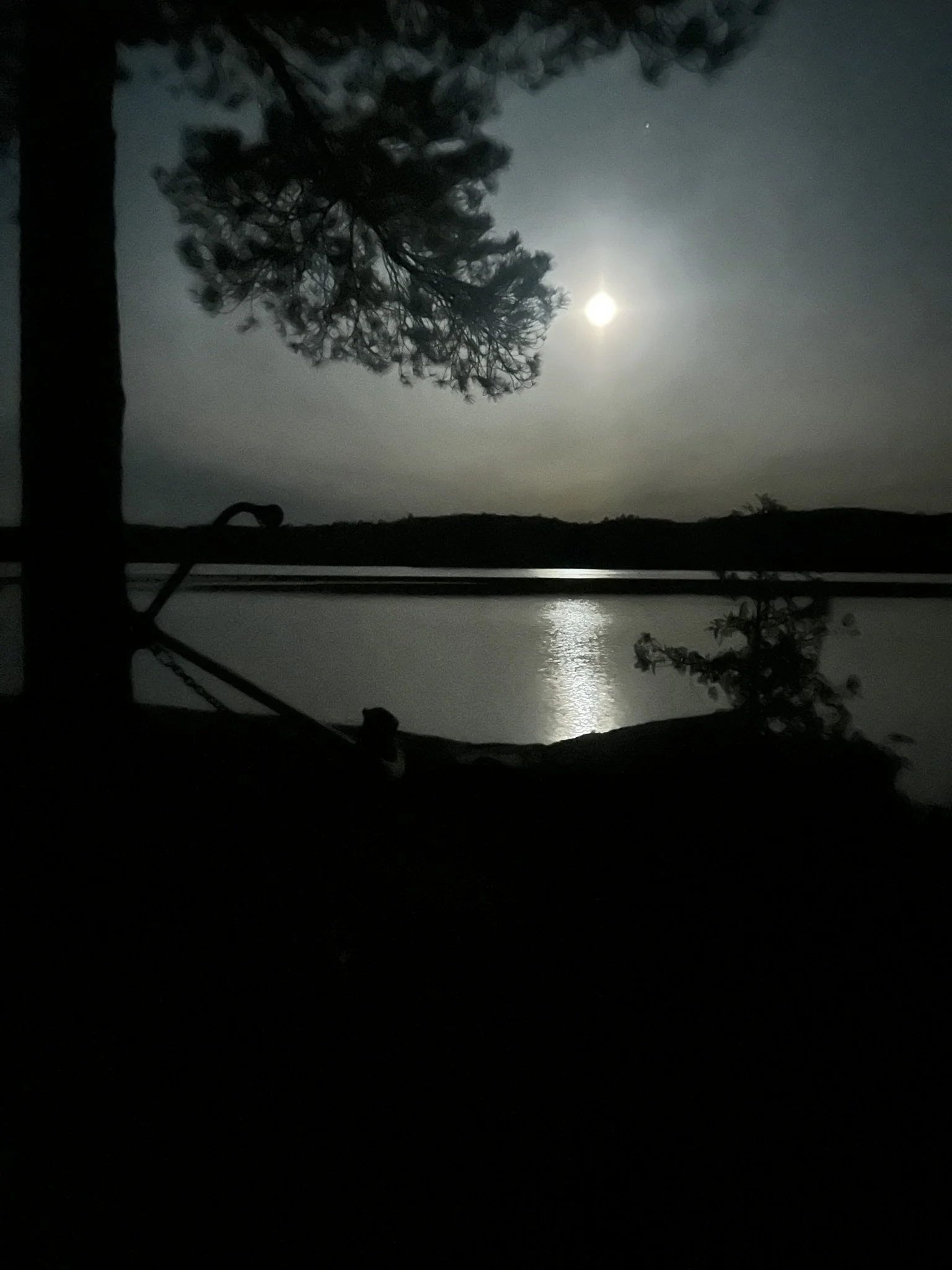
Launching onto Big Trout felt like entering a different world. The shoreline disappeared into darkness. My headlamp illuminated only a small patch of water ahead of the canoe while everything beyond that dissolved into blackness. Rain tapped against my jacket. Waves rolled in from somewhere out in the darkness and smacked the bow unexpectedly. Every sound felt amplified.
For long stretches I couldn't see much beyond what my headlamp revealed, and the whole experience felt strangely ancient. Sitting alone in a canoe on a massive lake, fighting wind and rain in the dark, I couldn't help but think about sailors and explorers who travelled long before GPS, weather forecasts, or modern gear existed. It felt less like canoe camping and more like something out of another era. Not necessarily frightening. Just surreal.
There was no chance I was crossing all of Big Trout that night (it’s quite big you know). So I hugged the shoreline and searched for the first available campsite. Eventually I found one tucked along the edge of the lake. By this point I had absolutely no idea what time it was. My phone and battery bank were dead. The colder-than-expected temperatures had turned what should have been two weeks of battery life into roughly five days.
I was soaked. Everything was wet. The rain continued. And I had absolutely nothing left. I honestly don't know how I got camp set up. The canoe got flipped upside down to protect gear underneath. The tent went up with the rainfly already attached. Water got filtered. Dry gear got thrown inside. Somehow the essentials happened. I was operating almost entirely on instinct and routine at that point.
Then I broke one of the cardinal rules of backcountry camping. Never bring scented food into the tent. Normally I wouldn't even consider it. But at that point I was soaked, exhausted, freezing cold, and completely out of energy. The choice felt less like following proper wilderness protocol and more like choosing between starvation and a bear. I chose the bear... A wilderness educator reading this is probably having a heart attack right now.
Then I climbed into the sleeping bag and oh my goodness, the relief. Comparable only to jumping into Burnt Island Lake after that brutal Day 1 portage. Pure comfort. Pure exhaustion. Pure relief. I don't even remember turning off my headlamp. One moment I was lying there listening to rain hit the tent. The next thing I knew it was morning. The hardest day of the trip was finally over.
And somehow, despite everything, it ended with the best sleep of the entire journey.
Trip at a Glance
Trip Length: 8 Days / 7 Nights
Solo Trip #: 3
Backcountry Trip #: 8
Planned Route:
Canoe Lake → Otterslide Lake → Big Trout Lake → Burntroot Lake (3 nights) → Big Trout Lake → Burnt Island Lake → Canoe Lake/Home
Actual Route:
Canoe Lake → Burnt Island Lake → Big Trout Lake → Burntroot Lake (3 nights) → Big Trout Lake → Little Otterslide Lake → Canoe Lake/Home
Paddling Distance: 88.8 km
Portaging Distance: 27.6 km
Total Distance Travelled: 116.4 km
Total Portages: 26
New Lakes Travelled: 6
New Creek Travelled: 1
Favourite Campsite: Anchor Island, Burntroot Lake