
Day 7 - There Are No Bad Trips, Only Bad Attitudes
Singing Through the Dark
When Day 7 Nigel looked back at Day 6 Nigel, he basically said, "Oh yeah? You think paddling Big Trout in the dark after fighting freezing rain and headwinds all day was tough? Hold my beer."
What followed wasn't quite as physically brutal as Day 6, but it was somehow just as memorable. Looking back, it almost feels like Day 6 and Day 7 were part of the same long adventure. Day 6 had pushed me harder than any day of the trip, and I woke up on Little Otterslide still feeling the effects of it. The first thing I remembered was that both my phone and battery bank were still completely dead. They had died the previous day, victims of several nights of colder-than-expected temperatures. Between the freezing nights and constant use, what should have been plenty of power for the trip had disappeared far sooner than expected.
For the first time all week, I had absolutely no idea what time it was. Normally that wouldn't bother me. I'm pretty good at estimating time based on the sun and the quality of the light. The problem was that the weather had been overcast for what felt like forever. No visible sun or shadows. Just a blanket of clouds. So when I finally crawled out of the tent, I couldn't have told you whether it was 8 a.m. or 11 a.m.
After everything Day 6 had thrown at me, I made a conscious decision to prioritize recovery. Sleep longer. Eat properly. Hydrate. Take my time. Rushing onto the water exhausted would've been a terrible decision. That's how mistakes happen in the backcountry. When you're physically depleted, mentally exhausted, and emotionally drained, judgment starts slipping. So I enjoyed the morning.
Oatmeal. A BLT without the tomato. One giant coffee instead of two separate coffees. I packed slowly and spent quite a while reading the Algonquin map while eating breakfast. One of my favourite things about Algonquin is that the map never stops inspiring future adventures. I'd find myself tracing possible solo routes, imagining future trips with my family/friends, and looking at lakes I'd never visited before. Even while sitting in the middle of a trip, I was already planning the next one.
Eventually camp was packed and I pushed off sometime after noon. I don't know the exact time, and honestly that's kind of fitting. By Day 7, I had stopped living by the clock and started living by weather, daylight, energy levels, and common sense.
Crossing Big Trout Lake actually wasn't too bad. There were still waves because there are always waves on Big Trout, but they weren't really working against me. If anything, they occasionally helped push me along. Big Trout is just such a massive lake that even in decent conditions it takes forever to cross. I think it took around an hour, although with no watch or phone, that's really just a guess.
One thing you learn quickly on lakes like Big Trout is pacing. You can't sprint it. You can't paddle hard the entire time. You'll completely destroy yourself before the day is over. Instead, you settle into a rhythm. Push a little harder for stretches, back off when needed, and find a pace you can maintain for hours. Then you simply keep moving. What I really missed, though, was music and podcasts.
For the first five days of the trip I always had something playing when things got difficult. Portages. Headwinds. Long crossings. There was usually some combination of Taylor Swift, Drake's Nothing Was the Same, or Pardon My Take keeping me company. Now the phone was dead, so I became the entertainment.
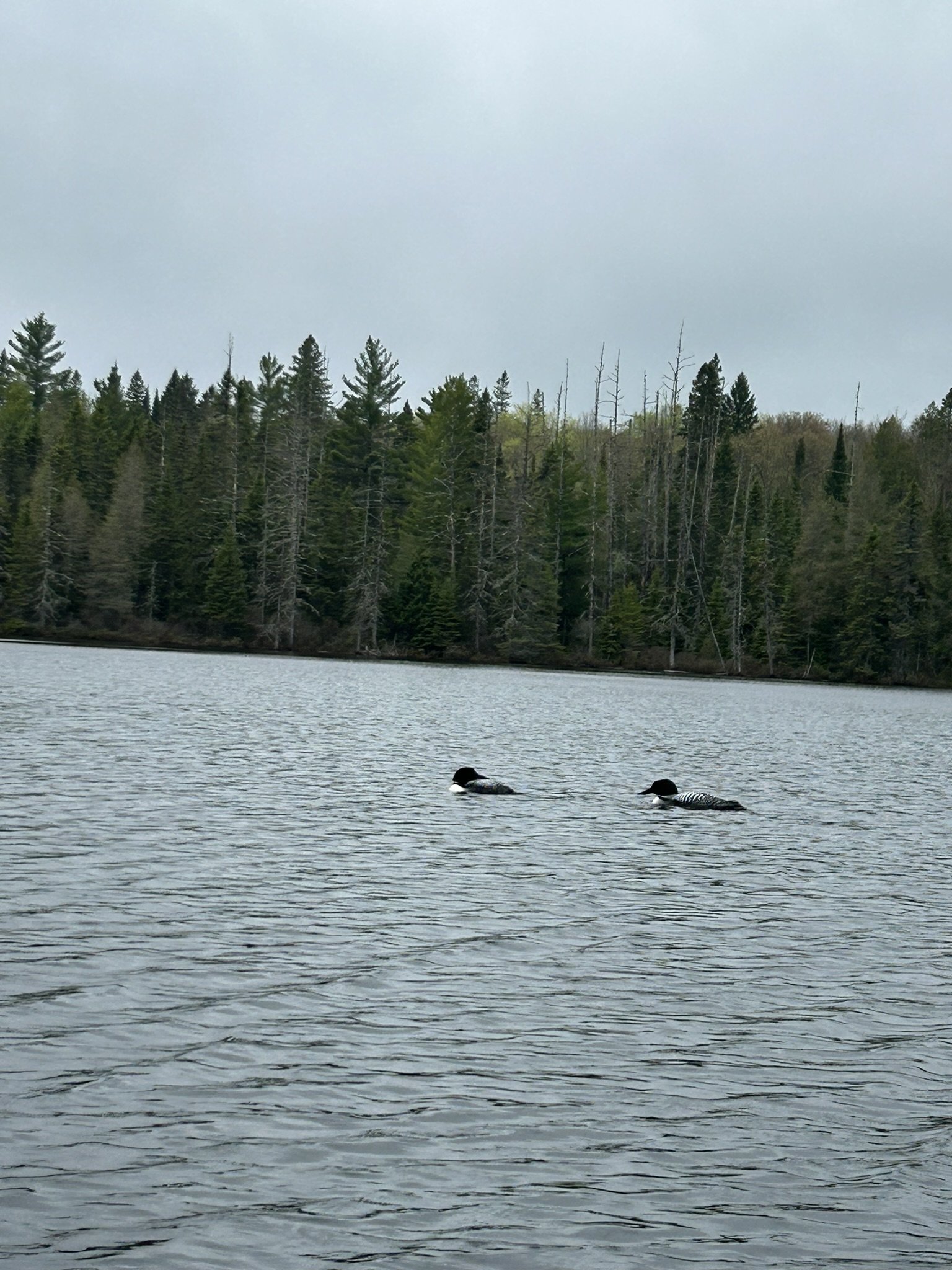
I started singing to myself while paddling across Big Trout. Taylor Swift. Random songs. Whatever happened to pop into my head. I'd sing for ten or fifteen minutes, stop for a while, paddle in silence, and then start again. Sometimes I'd remember only half the lyrics. Sometimes I'd completely make up the second half of a verse. There was nobody around to judge me anyway.
Honestly, it was kind of perfect. Somewhere out on Big Trout Lake, seven days into a solo canoe trip, I had officially become the weird guy singing to himself in the middle of the wilderness. At some point during the crossing, I had another really good cry too.
I found myself thinking about my dad again and talking to him a little. Not out loud dramatically or anything. Just quietly. The same way I'd done a few times earlier in the trip. It wasn't the same emotional experience I'd had on Burntroot, but it still felt meaningful. Grounding. Like I was exactly where I needed to be.
I also found myself feeling really proud of how far my navigation skills had come. Not once during this trip did I genuinely feel lost. Not once. I never had one of those moments where I looked around and thought, "I have absolutely no idea where I am." That might not sound like much, but for someone travelling through unfamiliar lakes, creeks, portages, and shorelines without GPS, it felt significant. Everywhere I went, I felt oriented. Whether it was recognizing shoreline features, reading terrain, spotting creek entrances, identifying where the next portage should be, or simply understanding where I sat on the map, I always felt connected to the landscape around me. Looking back, that might be one of the accomplishments I'm most proud of from the entire trip.
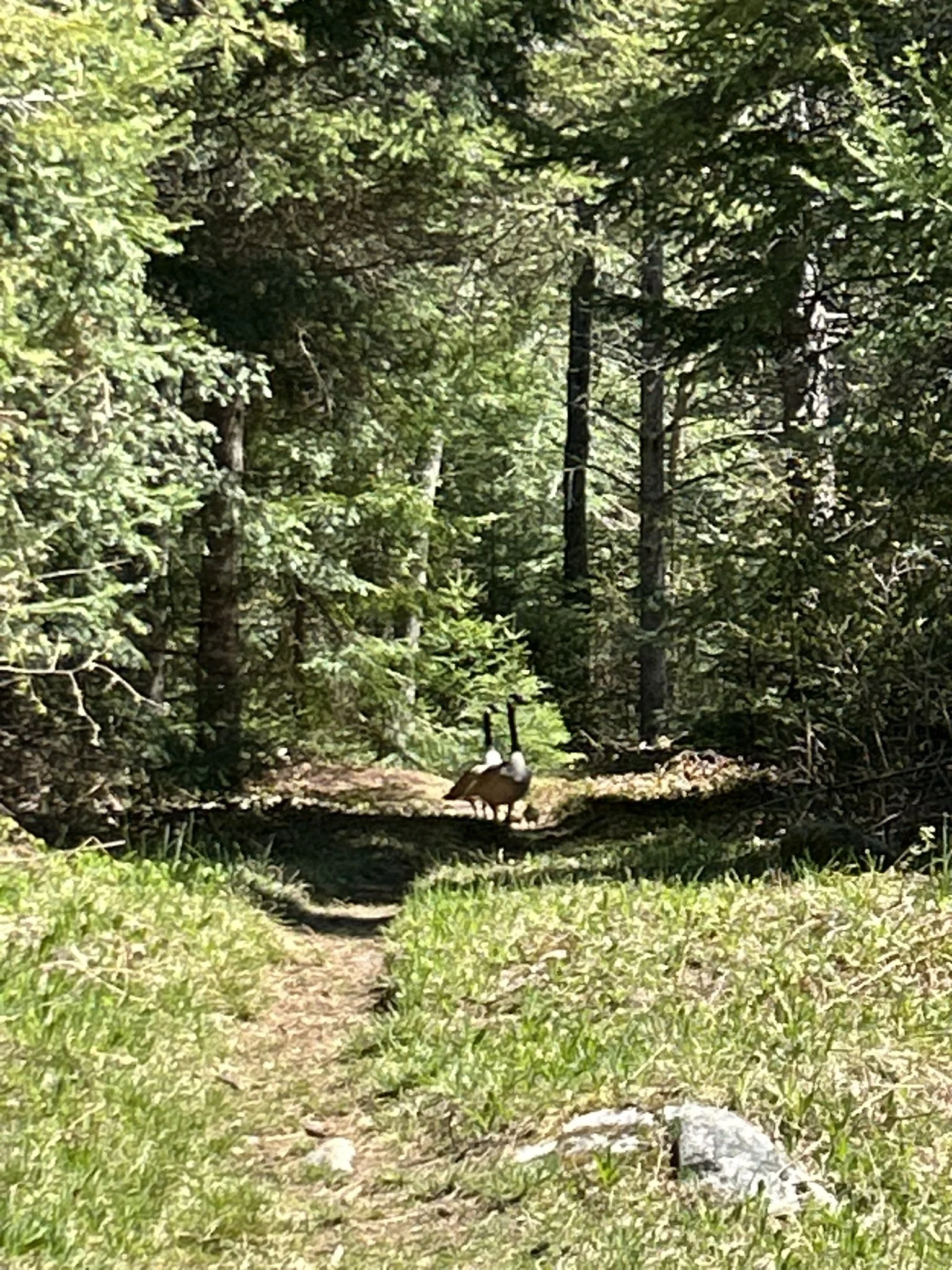
Eventually I worked my way through Big Trout and back into the creek system leading toward the Otterslide portages. It's funny because before the trip, I'd imagined doing this section at sunrise. In my head I was going to wake up early, travel through the mist, see wildlife everywhere, and have one of those classic Algonquin mornings. That didn't happen. Lots of birds, no major wildlife.
The creek itself felt much different than it had earlier in the week. The current was noticeably stronger, likely from all the rain. So now I was paddling against current, occasionally against wind, and constantly working through narrow creek funnels. It wasn't impossible. It was just tiring. The 100-metre portage came and went. Then the little paddle. Then the 700.
I barely remember doing the 700. I think my brain was completely fried at that point. I don't remember struggling through it. I don't remember enjoying it. I just remember doing it. Somewhere between random thoughts, song lyrics stuck in my head, and pure autopilot. I got across.
The long creek section afterward started beautifully. The first third of it was exactly the kind of travel that makes Algonquin special. Quiet water. Twisting channels. Beautiful scenery. The kind of place where you find yourself slowing down just to take it all in. The final two-thirds? I was ready for it to end. The current against me, wind was occasional, and my fatigue building. I just wanted to be done.
Eventually I reached the remaining portages. One in the low 200s, one in the 300s, and another in the low 200s. By the time I finished the second one, I could tell the day was starting to wind down. Even through overcast skies, there's a certain quality to the light that tells you evening is coming. The nice thing, at least, was that the rain had finally stopped. Unfortunately, by the time I completed the next portage, darkness had arrived.
What's interesting is that by this point my brain didn't really process that fact emotionally anymore. There was no dramatic moment of, "Wow, it's dark." Instead, everything became practical. My original plan had been to reach Burnt Island Lake that night, but doing that still required Otterslide, Little Otterslide, and the long 700-metre portage into Burnt Island. That wasn't happening. Not even close.
So before starting the next carry, I made the decision to call an audible. We're staying on Little Otterslide tonight. I'll get as far down the lake as I can and figure out tomorrow, well, tomorrow.
Honestly, there was something oddly freeing about making that decision. The goal immediately shifted from trying to force an unrealistic plan to simply travelling safely and enjoying the experience for what it was. Because yes, I was exhausted. Yes, there was some fear involved. Yes, I would've preferred daylight. But at the same time, I was paddling through Algonquin Provincial Park in complete darkness. That's not something most people ever get to experience.
I actually started laughing at one point. Every camping trip I've ever done, I've always said the same thing: "One night I should paddle out and really look at the stars." And every single trip I'd eventually decide it was too cold, too late, or I was too tired. Now there I was finally doing it. And there wasn't a single star visible. Just clouds. Darkness. Nothing.
As I paddled through the narrows between Otterslide and Little Otterslide, I kept talking and singing to myself. Partly to stay engaged. Partly because it kept me company. And partly because making noise seemed like a smart idea if wildlife happened to be nearby. My headlamp was running, and I had a powerful flashlight attached as well, so I basically had two light sources guiding me through the darkness.
Then suddenly something exploded through the woods on my left. Crash. Crash. Crash. Crash. It was Big. Definitely not a squirrel or a raccoon. Sounded like a moose or bear, one hundred percent.
Whatever it was, I must have been startled because it absolutely launched through the bush and disappeared into the darkness. I never actually saw it, but hearing something that large moving through the forest at night definitely gets your attention. Honestly, though, my first reaction wasn't fear. It was: "Well... that's cool."
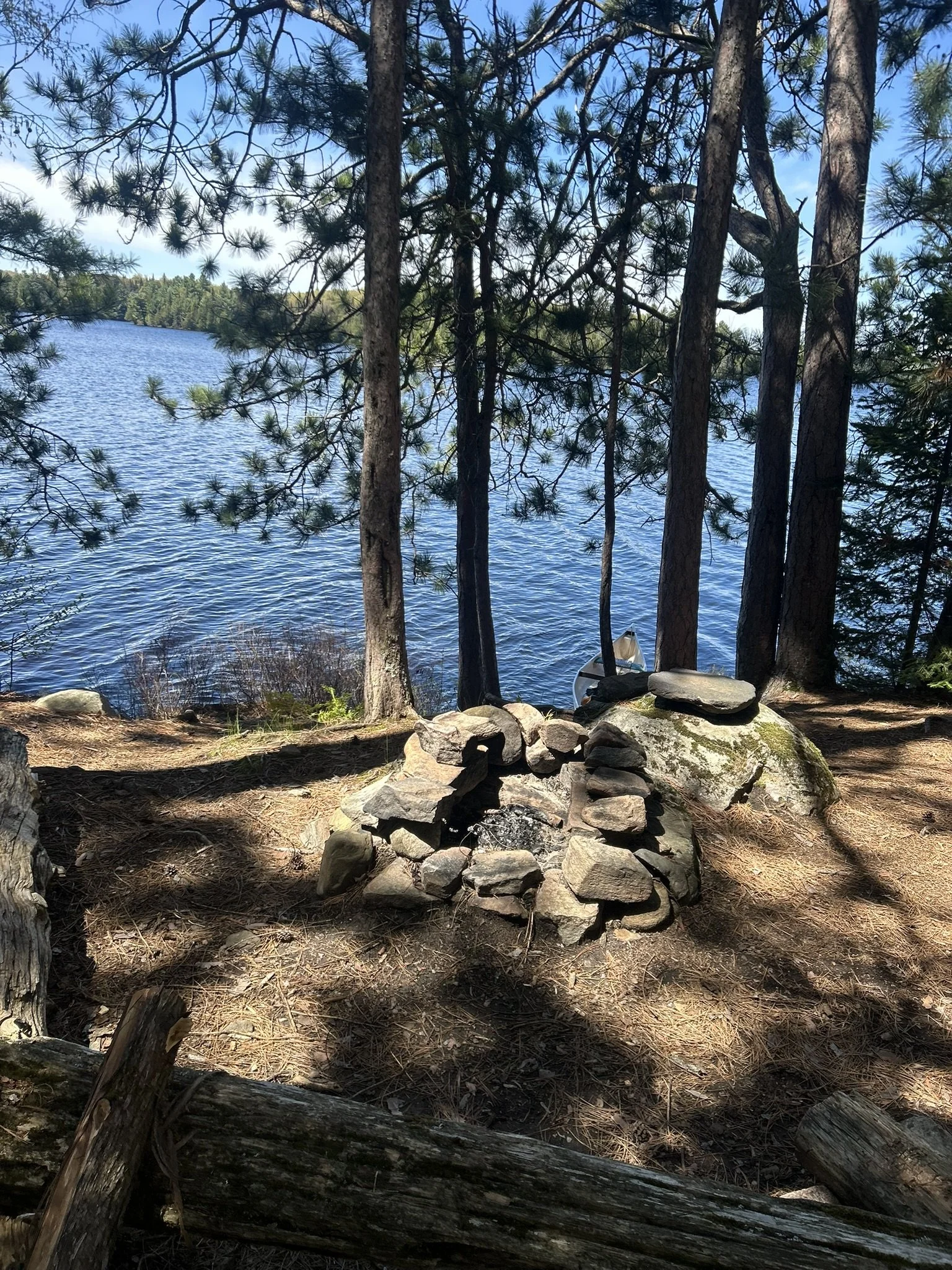
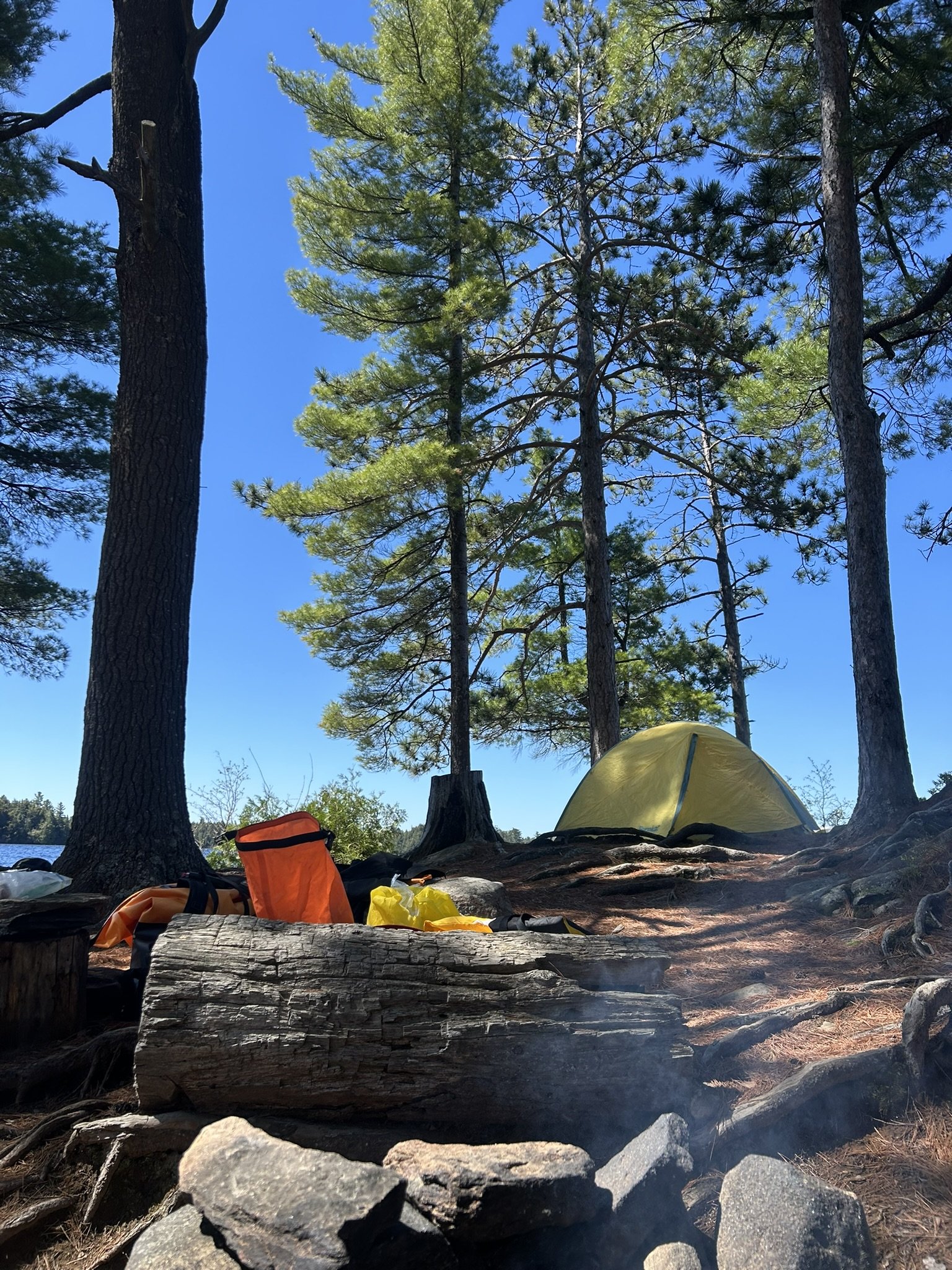
Eventually I reached Little Otterslide and started searching for a campsite. I ended up staying on one of the last sites down the lake. Nothing fancy. Honestly, it was kind of a rough little bush campsite. But it had a fire pit, a place for the tent, and enough room for me to sleep. At that point, that was all I needed. I never even found the thunderbox. Normally that would've bothered me but that night, I couldn't have cared less.
I was completely exhausted. Because I had run out of fuel days earlier, there was no realistic chance of making a proper meal. Even if conditions had been perfect, I don't think I would've had the energy. After all the rain, every piece of wood around camp felt damp anyway. So once again the evening became a very simple operation. I got the tent up and then took care of the one thing that still mattered before bed. Food.
Unlike the night before, there was no rain, so I stood outside camp eating snacks and winding down from the day. I had brought two books with me: Once Around Algonquin and An Astronaut's Guide to Life on Earth. By this point in the trip I'd started working through Once Around Algonquin, so after eating I climbed into the tent, settled into my sleeping bag, and spent some time reading while decompressing from another long day on the water.
Then I heard noises. At first I thought they were birds. Then I realized they weren't. I thought maybe loons but no, loons either don’t sound like that. And then it clicked. Wolves. Not close enough to worry about. Probably not even on Little Otterslide itself. Maybe somewhere around Otterslide. But wolves nonetheless. I remember lying there listening for a while, smiling a little. It's funny because wolves are one of those classic Algonquin sounds that people hope to hear on a trip. When it finally happened, my reaction wasn't fear so much as appreciation. It felt like one final wilderness experience before the trip came to an end.
That said, I still kept my bear spray and hatchet nearby like I did every night on the trip. Maybe I pulled the sleeping bag up a little higher. Maybe I held onto the hatchet a little tighter. But mostly I just listened. Eventually the sounds faded away, exhaustion took over once again, and before long I was asleep. That was Day 7. A very long and a very strange day. And somehow, another unforgettable one.
Trip at a Glance
Trip Length: 8 Days / 7 Nights
Solo Trip #: 3
Backcountry Trip #: 8
Planned Route:
Canoe Lake → Otterslide Lake → Big Trout Lake → Burntroot Lake (3 nights) → Big Trout Lake → Burnt Island Lake → Canoe Lake/Home
Actual Route:
Canoe Lake → Burnt Island Lake → Big Trout Lake → Burntroot Lake (3 nights) → Big Trout Lake → Little Otterslide Lake → Canoe Lake/Home
Paddling Distance: 88.8 km
Portaging Distance: 27.6 km
Total Distance Travelled: 116.4 km
Total Portages: 26
New Lakes Travelled: 6
New Creek Travelled: 1
Favourite Campsite: Anchor Island, Burntroot Lake